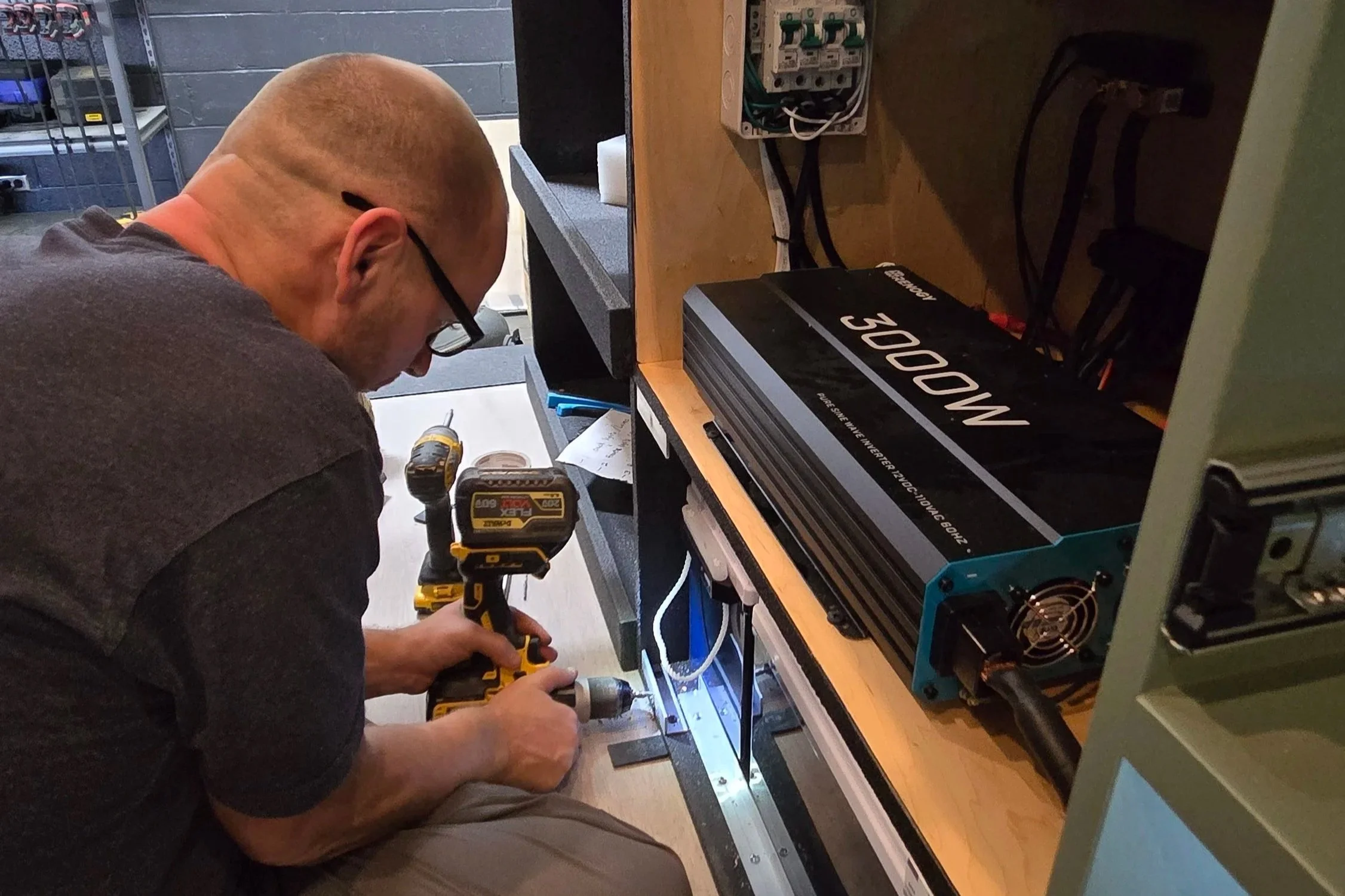
Building your own camper van can be incredibly rewarding. You get to make the decisions, create a space that fits your needs, and learn new skills along the way.
But there's one part of DIY van building that doesn't get talked about enough: the cost of fixing something that wasn't done correctly the first time.
We've seen electrical systems that needed to be completely rewired, components that needed replacing, and finished interiors that had to be opened up to access work that should have been done correctly from the start.
In many cases, the problem isn't a lack of effort. It's that van building involves specialized systems, and knowing how to install something isn't always the same as knowing how to install it correctly in a moving vehicle.
When a mistake is hidden behind finished walls or cabinetry, correcting it can become a much bigger project than doing it right the first time.
The good news? You don't have to figure everything out alone.
Electrical Work: A Common Source of Expensive Rework
Electrical systems are one area where getting things right from the beginning matters enormously.
A van's electrical system needs to be designed around the power you'll use, the components you're installing, and how everything works together. Wire sizing, fusing, connections, charging equipment, and battery compatibility all play a role.
When these details aren't handled correctly, the result can be an unreliable system, damaged components, or serious safety risks.
We've seen vans come into our shop with electrical installations that required significant rework. In some cases, that means replacing components and rewiring large portions of the system.
And if the wiring is hidden behind finished walls or cabinetry, accessing it can add another layer of work.
Instead of simply correcting the original problem, you may need to:
Remove finished panels or cabinetry to access wiring.
Replace improperly selected or installed components.
Reroute wiring and correct connections.
Reinstall finishes after the electrical work is complete.
That's a lot of extra work for something that could have been addressed during the planning stage.
The takeaway: If you're unsure how to design or install your electrical system, get guidance before you start running wires or closing up walls.
The Problem With Figuring Everything Out as You Go
There are plenty of parts of a van build you can learn along the way. But some decisions affect everything that comes after them.
For example, choosing your electrical components before understanding your actual power needs can lead to an undersized or incompatible system. Installing walls before planning your wiring routes can make future access difficult. Placing components without considering ventilation, clearances, or maintenance access can create problems you'll have to solve later.
When one part of the build isn't planned properly, it can affect several others.
That's where the cost of backtracking adds up. You're not just fixing the original issue. You're undoing completed work to get to it.
You may end up buying materials twice, paying for additional labor, and spending time rebuilding areas you thought were finished.
Not every problem can be anticipated, and even experienced builders sometimes need to make adjustments. But getting guidance before making major decisions can help you avoid preventable mistakes.
Getting Help Doesn't Mean You Can't Build It Yourself
One misconception about DIY building is that asking for professional help somehow defeats the purpose of doing it yourself.
We see it differently.
You can absolutely take the lead on your own build while getting help with the areas where you have questions. You don't need to hire someone to do the entire project to benefit from their experience.
Sometimes, what you need is a second opinion on your plans. Other times, you might need help understanding which components work together or how to approach a specific installation.
Getting those questions answered before you start can help you make better decisions, avoid unnecessary expenses, and feel more confident about the work you're doing.
It can also help you recognize when a job falls outside your current skill set and needs a qualified professional.
When Should You Book a DIY Consultation?
The best time to ask for guidance is before you've committed to a decision that's difficult or expensive to undo.
Consider getting help if you're:
Planning your electrical system and aren't sure how to size or configure it.
Choosing components and need help understanding compatibility or installation requirements.
Working through your layout and want to make sure your systems and equipment will fit together.
Unsure about an installation and want to understand your options before proceeding.
Stuck on a problem and don't want to guess your way through a fix.
You don't need to have a complete set of plans or a finished list of questions. Having a conversation early in the process can help you identify what you need to figure out before moving forward.
Let's Help You Get It Right the First Time
At Adventure Life Vans, we work with DIY builders who want to do their own work but recognize the value of experienced guidance.
Our DIY consultations give you time to talk through your project, ask questions, and get help thinking through your next steps.
Whether you're in the planning stage or preparing for a specific part of your build, we'll help you work through the details before they turn into expensive rework.
You don't have to know everything before you start. You just need to know when to ask for help.
Book a DIY consult with us!