The Problem With Buying camper Van Electrical Parts Too Early
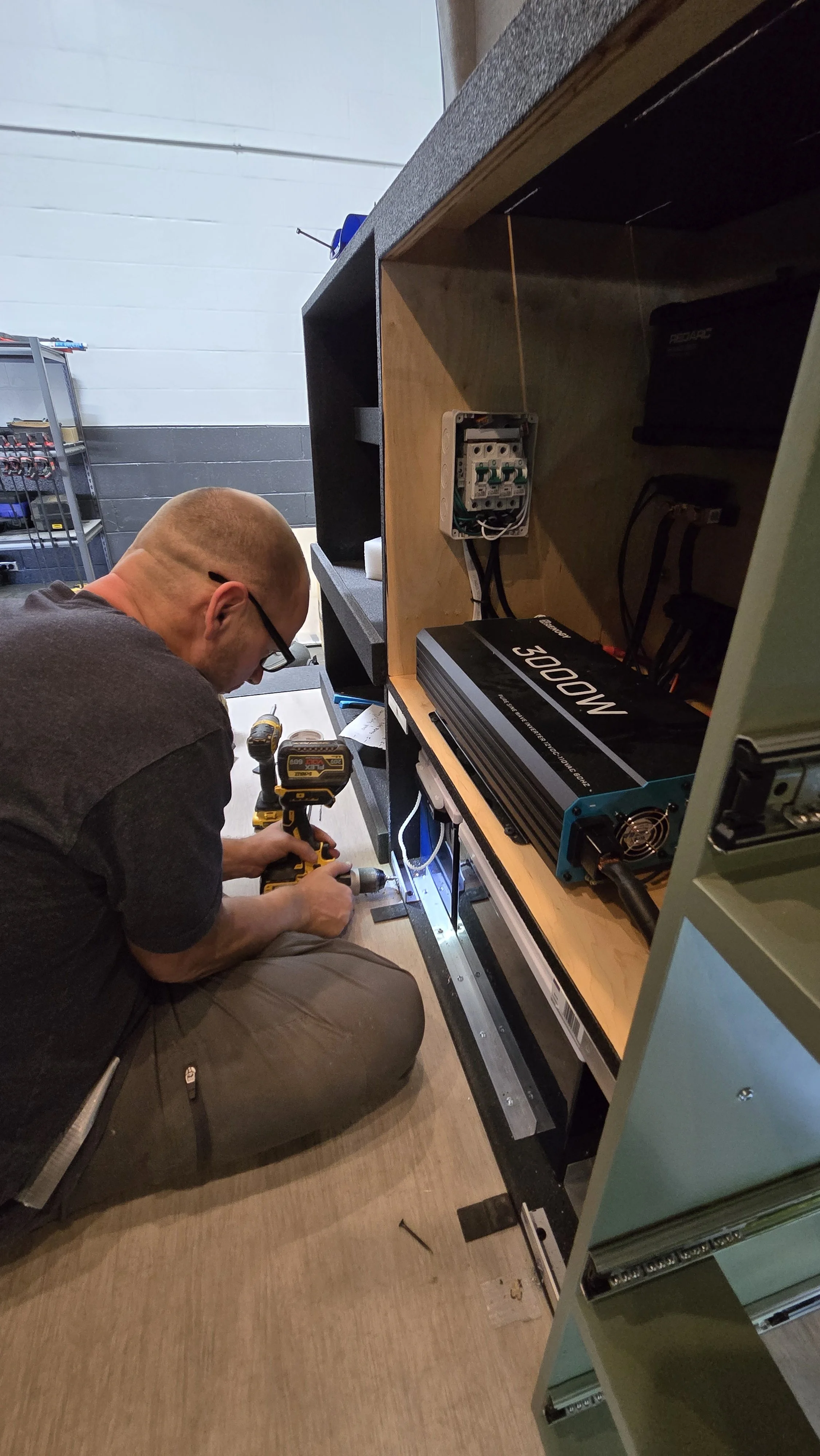
One of the most common situations we see with new van build clients starts with good intentions.
Someone decides they’re going to build their dream van. They start researching electrical systems, watching YouTube videos, joining van life forums, and reading every blog they can find. Eventually they start buying components piece by piece, batteries, inverters, chargers, wiring kits, solar controllers, before ever talking with a professional builder.
And while we completely understand the excitement and motivation to get started, buying electrical components before consulting with a builder often leads to some frustrating outcomes.
Here are a few of the most common ones we see.
1. Components That Don’t Work Well Together
Van electrical systems are more complex than they appear online.
Many DIY builders purchase high-quality individual components, but those components don’t always integrate well into a single system. Certain batteries require specific chargers, some inverters aren’t ideal for certain battery banks, and wiring requirements vary widely depending on the setup.
When parts are purchased independently without a full system design, we often end up with equipment that:
Doesn’t communicate properly
Requires additional adapters or controllers
Needs completely different wiring than what was expected
At best, it creates extra work and added cost. At worst, components have to be replaced entirely.
2. Overspending on Things That Aren’t Necessary
Another common scenario is buying more system than you actually need.
Someone sees a build online with a massive battery bank, large inverter, and full solar array, so they assume they need the same setup. But their travel style might only require a fraction of that capacity.
We’ve seen clients purchase:
Huge battery banks for minimal power needs
Oversized inverters for appliances they’ll never run
Solar setups that won’t realistically fit their roof layout
Without designing the system around how you actually use your van, it’s easy to spend thousands more than necessary.
3. Missing Critical Components
The opposite problem also happens a lot.
Clients buy the major pieces, batteries, inverter, solar panels, but overlook the smaller but essential parts that make the system safe and functional.
Things like:
Proper fusing and breakers
Bus bars and distribution blocks
Correct gauge wiring
Battery monitoring systems
Ventilation considerations
When we see a pile of parts in the shop, we often have to fill in these missing pieces before installation can even begin.
4. Components That Don’t Fit the Layout
Electrical systems aren’t just about power, they’re about space and layout.
Where the batteries go, how cables are routed, where breakers are mounted, and how ventilation works all matter. When components are purchased before a layout is designed, we sometimes run into issues where things simply don’t fit where they need to go.
Large battery banks may require more space than planned. Certain inverters may require clearances for cooling. Some systems simply work better in specific orientations or locations.
Without designing the system alongside the van layout, it can become a puzzle that’s harder, and more expensive, to solve later.
5. Delays in the Build Process
Perhaps the most frustrating outcome is delays.
When we discover components that won’t work with the planned system, clients have to:
Return parts
Resell components
Purchase replacements
Wait for new equipment to arrive
All of this can push the build timeline back weeks or even months.
And after already investing money into the wrong components, it can feel like a frustrating setback.
The Better Approach: Start With a System Design
The best time to plan your electrical system is before you start buying parts.
A good builder will help you design a system based on:
How you actually travel
What appliances you plan to run
Your climate and camping style
Your roof space and van layout
Your budget
Once the system is designed, you can confidently purchase components knowing they’ll work together, fit your layout, and support the way you actually use your van.
The Bottom Line
We love when clients come in excited and ready to start their build. That energy is what makes these projects so fun.
But if you’re planning your dream van, one of the smartest things you can do is pause before buying electrical components and talk with someone who designs these systems every day.
It can save you money, prevent major headaches, and make sure your van’s electrical system is something you can rely on for years of adventure.
Because when you’re miles from the nearest town, the last thing you want to worry about… is whether your power system will work.
Need support? Contact us today!