DIY vs. Pro Electrical Upgrades: What We See Go Wrong
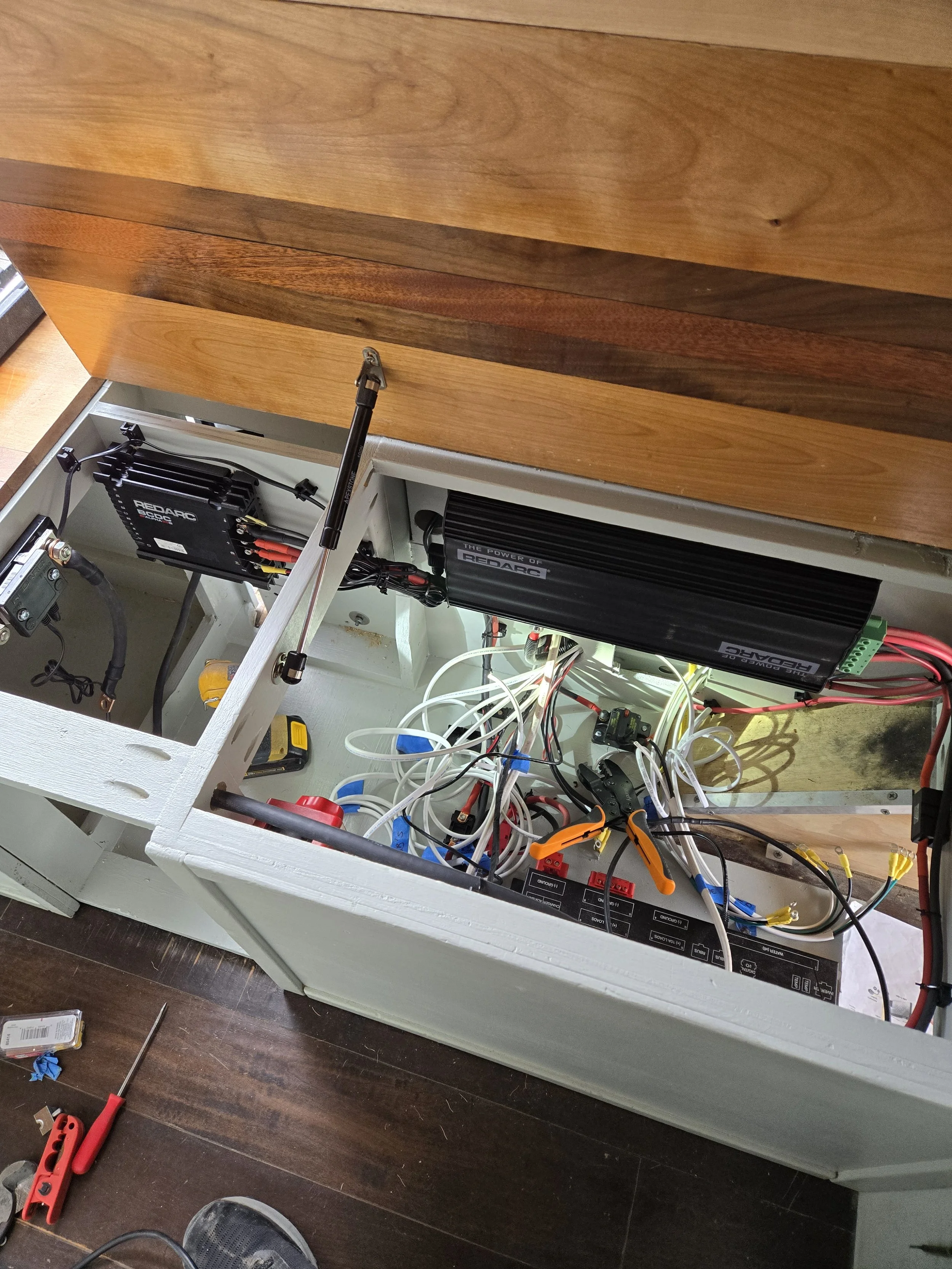
DIY van building can be incredibly rewarding. We love working with people who want to build their own vans, learn how their systems work, and take ownership of the process.
But there's one area where we see DIY projects go sideways more often than others:
Electrical.
And usually, the problem isn't that someone didn't do their research. In fact, it's often the opposite. They've watched countless YouTube videos, read forums, researched products, and feel confident about what they want to install.
The challenge is that van electrical systems aren't one-size-fits-all.
The right system depends on your van, how you plan to use it, what you want to power, how long you'll be off-grid, and how you'll recharge your batteries.
Here are some of the most common mistakes we see—and what a professional approach looks like instead.
1. Using Components Designed for Residential Applications
One of the biggest mistakes we see is using electrical components that were designed for a house or stationary application.
A van is not a house on wheels.
Your electrical system lives inside a vehicle that moves, vibrates, experiences temperature changes, and is exposed to very different conditions than a residential electrical system.
That means the components, wiring, connections, mounting, and overall system design need to account for the realities of a moving chassis.
Something being appropriate for a house doesn't automatically mean it's appropriate for a camper van.
This is one area where "it worked in my garage" isn't necessarily enough.
2. Building an Underpowered System
Another common issue is simply not having enough electrical capacity for the way the van is actually being used.
Maybe the original plan was to run a few lights, a refrigerator, and some USB chargers.
Then the van evolves.
Suddenly there's a 12V air conditioner, induction cooking, Starlink, laptops, fans, and other equipment drawing power.
The original system wasn't necessarily "bad." It just wasn't designed for the new use case.
We've had plenty of clients come to us because their batteries are running flat after a day or two off-grid.
The answer isn't always "buy a bigger battery."
Sometimes there's an unexpected draw. Sometimes the charging system isn't doing what it should. Sometimes the battery is failing. And sometimes the system simply wasn't designed to provide the amount of power the owner needs.
The important part is figuring out why before throwing more components at the problem.
3. Only Having One Way to Charge
If you're going to spend time off-grid, we strongly recommend thinking about how you'll recharge your batteries.
Solar can be helpful.
DC-to-DC charging while driving can be helpful.
Shore power can be helpful.
None of these necessarily needs to be your only source of charging.
We often like to build systems with multiple ways to replenish the battery bank because different adventures call for different solutions.
You may have plenty of sun on one trip and almost none on another. You may spend several days parked in one location or drive several hours in a day.
Having multiple charging sources gives you more flexibility and can make your system much more resilient.
4. Buying Products Before Creating a Plan
This is probably one of the easiest mistakes to make.
You find a battery you like.
Then a charger.
Then an inverter.
Then solar.
Then you realize the components don't necessarily work together the way you expected—or don't fit the space you have available.
We've had DIY clients come to us after they've already purchased thousands of dollars in electrical components.
Sometimes we can make what they've purchased work.
Other times, we have to recommend replacing products or reworking parts of the system.
That's frustrating for everyone.
We'd much rather see you come to us with an empty van and a bunch of questions than with a pile of expensive components that may not work for your project.
5. Not Planning for How You'll Actually Use the Van
This is perhaps the biggest difference between choosing individual products and designing an actual electrical system.
A professional approach starts with questions.
How many people will use the van? Where do you plan to travel? How long do you want to stay off-grid? Will you work remotely? Do you want air conditioning? Are you bringing pets?
Those answers help determine what your electrical system actually needs to accomplish.
The goal isn't to build the biggest system possible. It's to build the right system for your life.
What a Professional Electrical System Looks Like
When we design or upgrade an electrical system, we're looking at the entire picture.
We consider your current needs and your future use case.
That means looking at:
Battery capacity
Solar
DC-to-DC charging
Shore power
Inverters and chargers
Electrical loads
Wiring and connections
Available space
How components will be accessed and serviced
How everything works together
We're also thinking about what happens when your plans change.
Because they probably will.
Maybe you decide you want to add air conditioning. Maybe you start working remotely from your van. Maybe your weekend trips turn into month-long adventures.
A good system should be designed with some of that flexibility in mind.
DIY Doesn't Mean You Have to Figure It Out Alone
We work with plenty of DIY builders who want to do the actual installation themselves.
That's completely fine.
Our job isn't to tell you that you need to hand your entire project over to us.
Sometimes what you need is expert guidance before you start.
That's why we offer our one-hour diagnostic sessions.
You can bring your van into our Boise shop before you've purchased your components, and we'll talk through how you intend to use it, what you want the system to accomplish, and what you'll need to make that happen.
We can help you avoid buying the wrong products, identify potential problems, and create a plan you can actually follow.
Start With the Plan, Not the Products
The internet is an incredible resource for learning about van building.
But there's a big difference between learning what a product does and knowing whether that product belongs in your specific van.
That's where experience matters.
We'd rather help you build the right system once than help you fix the wrong system later.
If you're considering an electrical upgrade, or you're a DIY builder getting ready to start your electrical system, come talk to us before you buy anything.