Insulation & Heating: What Actually Keeps a Van Warm
If you're planning to use your van through the fall and winter, you might assume the key to staying warm is simply installing a good heater.
A good heater certainly helps, but keeping a van warm is about more than the heater.
Your insulation, ventilation, moisture management, windows, and heating system all work together to determine how comfortable your van actually feels when the temperature drops.
If you're building your van yourself, understanding how these pieces work together can save you from spending money on a heater that is working overtime because the rest of the van isn't prepared to hold onto the heat.
Here's what we recommend thinking about.
Start With Good Insulation
A heater creates heat. Insulation helps you keep it.
Without adequate insulation, the heat your heater produces can quickly escape through the van's walls, ceiling, floor, doors, and windows.
That's why insulation should be considered part of your overall heating strategy—not an afterthought.
A well-insulated van will generally be more comfortable, more efficient, and easier to heat than a van with large areas of exposed metal and thermal bridges.
But insulating a van isn't exactly the same as insulating a house.
A van is a small metal structure that moves through constantly changing temperatures and environments. You also have people sleeping, cooking, showering, and simply breathing inside the space.
Which brings us to an important consideration: moisture.
Why We Use Havelock Wool
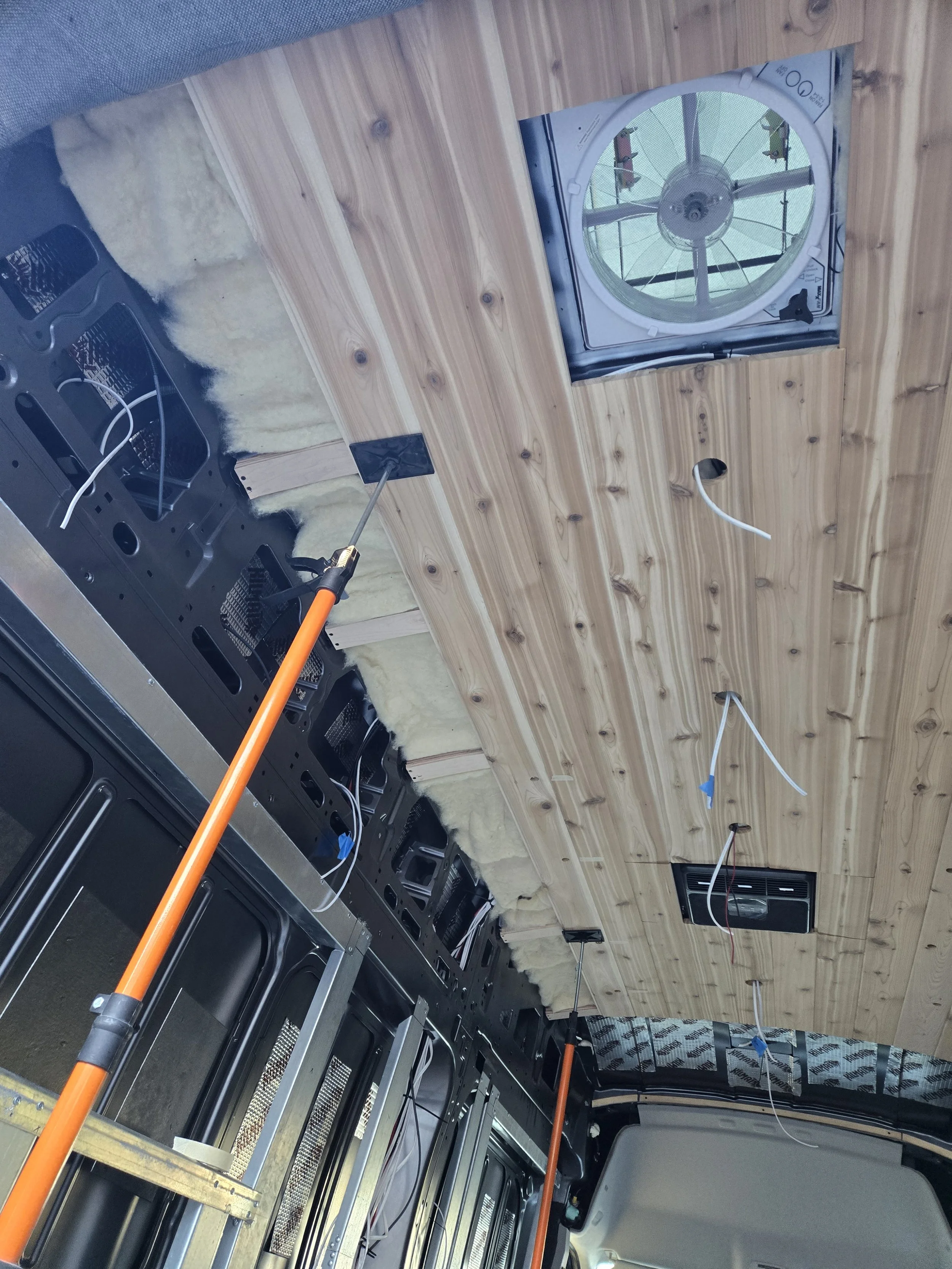
At Adventure Life Vans, one of our preferred insulation materials is Havelock Wool.
Why wool?
Because moisture is going to happen in a van.
You can do everything right and still have moisture inside your van. You're breathing. You're cooking. You're bringing wet gear inside. You're opening the doors when it's raining. You're sleeping inside a relatively small enclosed space.
The goal isn't to pretend moisture won't exist. It's to choose materials and build practices that make sense for that reality.
Havelock wool is a natural insulation material that can help regulate moisture within the van's environment. It's also relatively easy to work with and is well suited to the irregular cavities found throughout a van.
For us, it's one piece of a larger approach to building a van that can handle real-world use.
Insulation Isn't Just About the Walls
When DIY builders think about insulation, they often focus primarily on stuffing insulation into the walls.
But heat can escape from, and cold can enter through, many parts of the van.
You'll want to consider:
Walls
Ceiling
Floor
Rear and side doors
Cab area
Windows
Areas around openings and penetrations
Metal framing and other thermal bridges
The goal isn't necessarily to create a perfectly sealed environment. Instead, you're trying to create a thoughtful thermal envelope around the living space.
And don't forget the floor.
Cold coming up through the floor can make the entire van feel colder, even when the air temperature inside is relatively comfortable.
Windows Are a Big Part of the Equation
Windows are another major consideration.
They're great for natural light and ventilation, but glass isn't going to provide the same insulation value as an insulated wall.
If you're building for serious cold-weather use, think about how you'll manage your windows when temperatures drop.
Insulated window coverings can make a noticeable difference, particularly overnight.
And remember that ventilation still matters—even when it's cold.
Wait… Ventilation in Winter?
Yes.
This is one of the counterintuitive parts of heating a van.
You might think that the goal is to close everything up so you don't lose any heat.
But moisture needs somewhere to go.
Two people sleeping inside a small van can produce a surprising amount of moisture overnight. Add cooking, wet clothing, snow-covered gear, or other sources of moisture, and condensation can become a real issue.
That's why heating and ventilation need to work together.
A MaxxAir fan can help move humid air out of the van and bring fresh air in, even when you're using your heater.
You don't want to eliminate ventilation simply because it's cold outside.
Then Comes the Heater
Once you've created a reasonably well-insulated space, your heater can do its job much more effectively.
At Adventure Life Vans, we commonly install Webasto and Espar heaters because we've had good experiences with them over the years.
A properly sized and installed heater should be able to comfortably heat your van without constantly struggling to keep up.
The right heater also depends on your van and how you're using it.
Are you using the van occasionally in shoulder seasons? Spending weeks skiing in the mountains? Living in it full-time? Traveling with a dog?
Those details matter.
Your Electrical System Matters Too
Depending on the heater you're using, your electrical system also needs to be able to support it.
If you're already designing your battery bank, charging system, solar, and other electrical loads, include your heater in the overall calculation. And any additional items that need to be powered to create your ventilation system - heaters are typically low draw items but are you also considering 12V AC or other components that need more power? It is less costly when we plan ahead for these items.
Don't design your electrical system first and then try to squeeze additional loads into it later.
What Actually Keeps a Van Warm?
It's not one thing.
A warm van is the result of multiple systems working together:
Good insulation helps slow heat loss.
Thoughtful construction reduces gaps and thermal bridges.
Window coverings help manage one of the weakest points in your thermal envelope.
A properly sized heater creates the heat you need.
Ventilation helps manage moisture and condensation.
A properly designed electrical system keeps your systems running when you're off-grid.
And your habits matter, too.
Keeping doors closed, managing wet gear, ventilating appropriately, and understanding how your particular van responds to cold weather all make a difference.
Don't Build for an Ideal Van. Build for Your Actual Adventures.
If you're a DIY builder planning to use your van in cold weather, we'd encourage you to think about the entire system before you start purchasing products.
Don't simply search for "best van heater" and buy whatever comes up first.
Think about how you'll use the van, where you'll travel, how cold it will get, how much electrical capacity you'll need, and how you're going to manage moisture.
The best van systems aren't necessarily the biggest or most expensive. They're the ones designed around the actual use case.
If you're planning a DIY build and want help figuring out insulation, heating, electrical, or other systems before you start buying products, that's exactly what our diagnostic sessions are designed for.
Bring us your questions and we'll help you create a plan before you start installing.