Final Tour of Our Latest Custom Build: Designed for Real Adventure
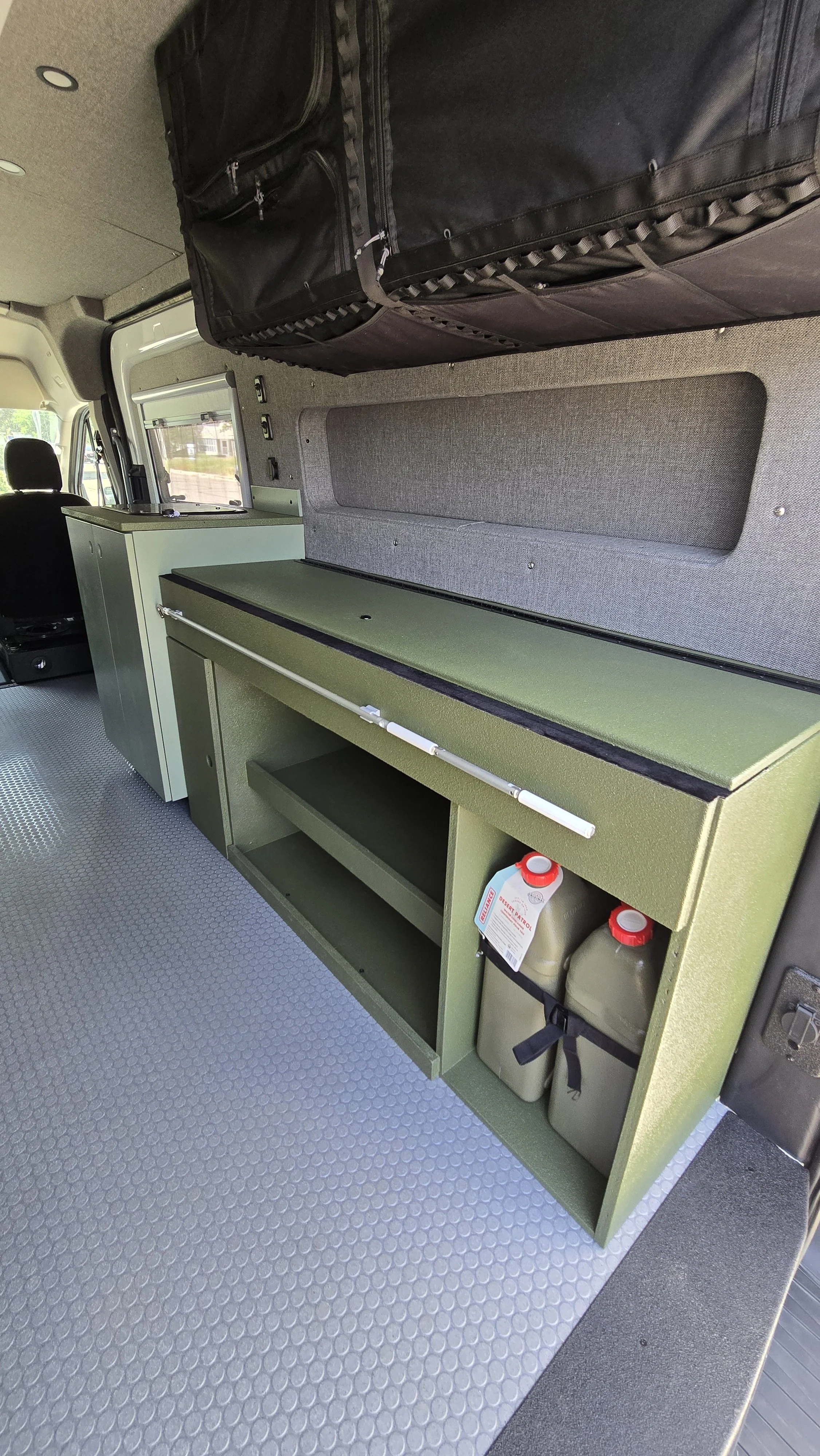
One of our favorite parts of any custom build is the final walkthrough.
It's the moment when all the planning, problem-solving, fabrication, and attention to detail come together into a van that is ready for years of adventure.
What makes this build particularly special is that it doesn't follow the typical camper van formula.
Instead of trying to include every possible feature, this client focused on what would actually support the way they travel.
The result is a van that feels intentional, durable, and highly functional.
A Different Approach to Overhead Storage
One of the first things people notice about this build is what's missing.
There are no traditional upper cabinets.
Because this was a mid-roof Transit that the client brought to us, we wanted to maximize the feeling of space inside the van.
Instead of installing permanent overhead cabinets, we opted for removable soft storage bags.
This approach offers several advantages:
More open sight lines throughout the van
Less visual clutter
Easier access to gear
Flexibility to remove storage when it's isn't needed
For this client's style of travel, it simply made more sense than traditional cabinetry.
Built to Be Used
Some vans are built primarily for aesthetics.
This one was built for adventure.
That's why you'll find Linex throughout much of the interior.
Linex is incredibly durable and stands up well to:
Muddy gear
Wet clothing
Dogs
Bikes
General wear and tear
The goal was to create a van that could be used hard without the owner constantly worrying about damaging finishes.
When clients spend a lot of time outdoors, durability often becomes more important than having delicate materials that look perfect in photos.
A Simpler Water System = More Storage
One of the biggest design decisions in this build involved the water system.
Many van builds focus on maximizing water capacity.
But after discussing how this client actually travels, we realized that wasn't necessary.
Instead, we opted for a much simpler water setup.
The benefit?
Significantly more storage space.
By reducing the footprint of the water system, we were able to create additional room for gear, supplies, and everyday essentials.
This is a perfect example of why every build should start with understanding how the owner will actually use the van.
The right answer isn't always "more."
Sometimes it's simply "different."
Staying Connected Without Sacrificing Clearance
Connectivity was another important consideration.
This build includes a WeBoost system to help improve cellular reception in remote areas.
However, many antennas can create clearance issues when driving through parking garages, under tree branches, or other low-clearance environments.
To solve that problem, we installed a collapsible antenna system.
The antenna can be deployed when needed and lowered when traveling, providing the best of both worlds:
Better connectivity
Improved overhead clearance
Less risk of damage
Built Around the Client's Lifestyle
The biggest takeaway from this build isn't any single component.
It's the philosophy behind it.
Every decision was made based on how these clients actually adventure.
They wanted:
Durability
Simplicity
Flexibility
Practical storage
Reliable connectivity
And that's exactly what this build delivers.
At Adventure Life Vans, we believe the best builds aren't the ones packed with the most features.
They're the ones that fit their owners so well that they disappear into the background and simply allow more adventure to happen.
And this van is a perfect example of that philosophy in action.
Need some help? Contact us!