Replacing a camper Van Battery? Don't Stop There.
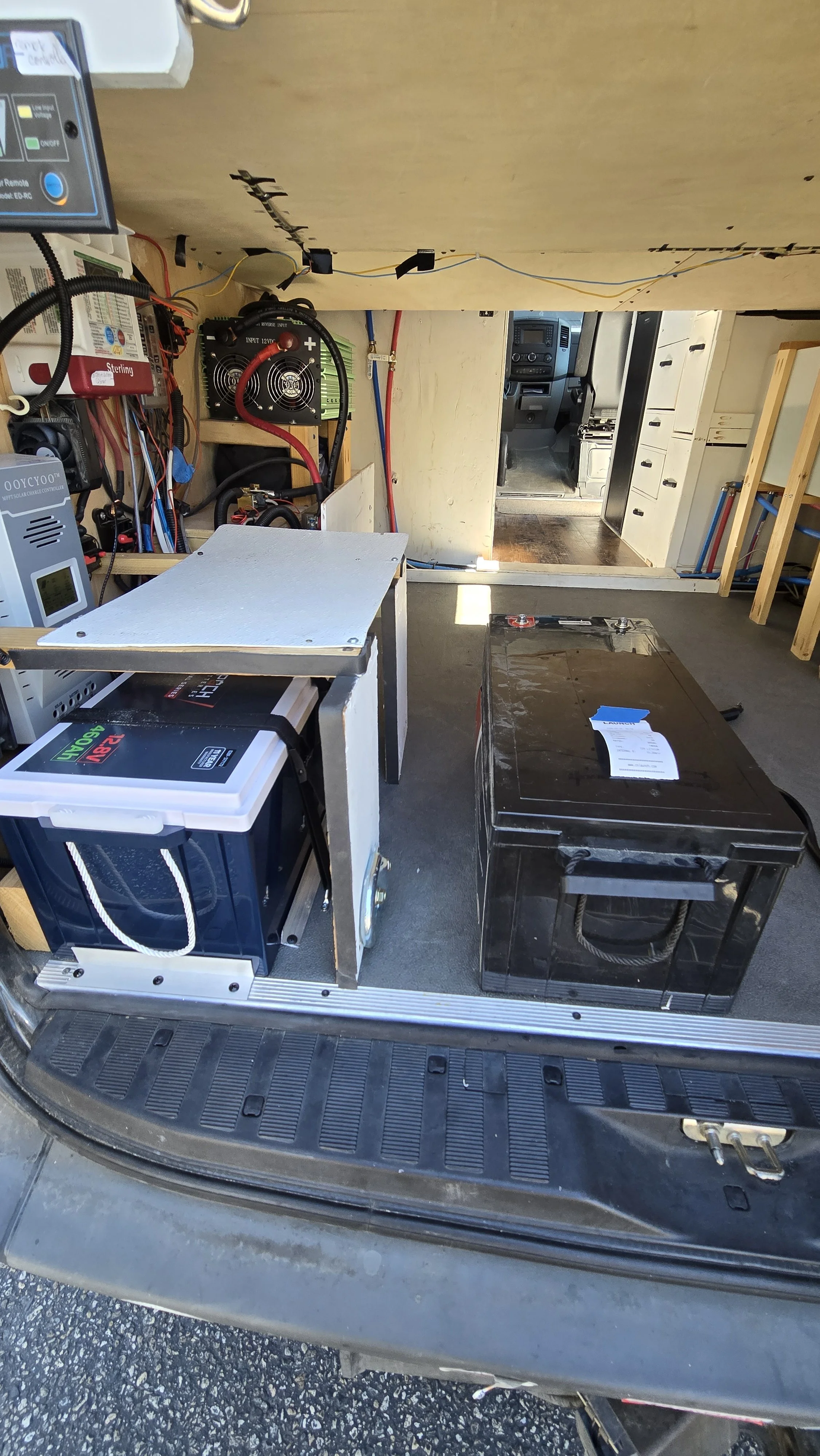
When a battery fails in a van, the obvious solution is to replace it.
And sometimes that's exactly what needs to happen. (With this particular battery, we could tell it was visibly warped and no longer safe to use!)
But when we're working on an existing electrical system, we don't like to simply pull out the bad battery, install a new one, and send the van back down the road.
A failed component is also an opportunity to look at the system around it.
That's exactly what we're doing with this van.
The Battery Was Bad. But We Wanted to Look at the Whole System.
This particular van came into the shop with a failed battery.
We're replacing it with a single Epoch 460Ah lithium battery, which gives the owner a substantial amount of usable capacity in one battery.
But before we consider the job finished, we're also going through the existing electrical system.
We're looking at things like:
Wire gauge
Loose connections
Connection quality
Routing
Organization
Labeling
Components that may not be appropriately sized
Anything that looks like it could become a problem later
Because replacing one component doesn't necessarily solve everything.
If It Looks Bad, We Want to Know Why
One of the things Blake says often when looking at electrical systems is essentially: if something looks bad, there's a good chance it is bad.
That's not to say every messy wire automatically means a system is unsafe or every imperfect-looking installation is failing.
But visual inspection can reveal clues.
A loose connection, questionable wire sizing, poorly supported wiring, missing labels, or difficult-to-access components are all reasons to take a closer look.
Electrical systems aren't something we want to make assumptions about.
We want to understand what we're looking at before we start making changes.
It's Not Just About Making It Work
This is one of the biggest things we think about when we're working on van electrical systems:
Someone may have to work on this system again someday.
Maybe that's us.
Maybe it's another technician.
Maybe it's the owner themselves, sitting in a campground somewhere trying to figure out why something suddenly isn't working.
That's why organization and labeling matter.
An electrical system shouldn't be a rat's nest of wires that only makes sense to the person who originally installed it.
Wires and components should be organized and labeled in a way that makes the system understandable.
That doesn't just make the installation look nicer.
It makes future troubleshooting and repairs significantly easier.
Think About the Person Who Comes After You
This is especially important for DIY van builders.
You might know exactly what every wire does today because you just installed it.
But five years from now, will you remember?
What about the person who buys your van after you?
Or the technician who has to troubleshoot it while you're traveling?
Good labeling and documentation can save a tremendous amount of time.
At a minimum, consider clearly identifying major components, circuits, and connections. Keep track of wire sizes and fuse ratings, and maintain a simple diagram or documentation of your system.
Future-you will appreciate it.
A Battery Upgrade Is an Opportunity
If you're bringing your van in for a battery replacement or electrical upgrade, this is a good time to have the system evaluated as a whole.
That doesn't necessarily mean replacing everything.
In fact, we're not interested in selling you components you don't need.
It means making sure the new battery actually works with the existing system and identifying anything that could cause problems down the road.
A new lithium battery doesn't fix an incorrectly sized wire.
It doesn't fix a loose connection.
And it doesn't automatically make an existing electrical system better designed.
The battery is one piece of the system.
Build Electrical Systems for the Long Term
Whether you're building a van from scratch or upgrading an existing system, think beyond whether everything works today.
Ask yourself:
Is it appropriately sized?
Is it organized?
Is it labeled?
Can someone troubleshoot it later?
Can I understand what I installed six months—or five years—from now?
Those questions are just as important as choosing the right battery.
Because good electrical work isn't simply about getting power from point A to point B.
It's about creating a system that is safe, reliable, serviceable, and understandable.
If you're having electrical problems, replacing your batteries, or considering an upgrade, we'd rather look at the whole system than simply swap a component and hope for the best.
That's exactly what our diagnostic sessions are designed to do.
Need help with your battery or electric system? Book your diagnostic appointment below and we’ll help you get it done!